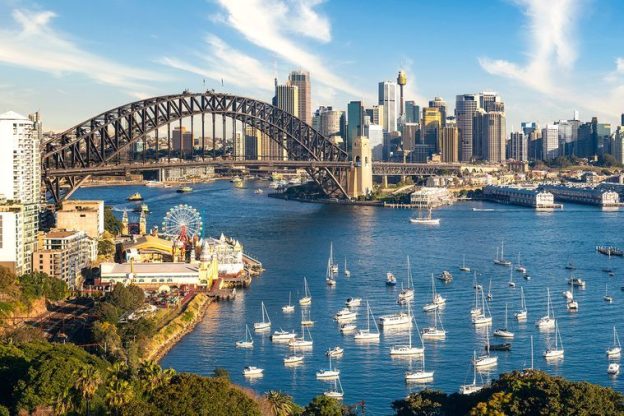
When discussing the richest cities in Australia, many people immediately think of Sydney because of its famous skyline, luxury waterfront properties, and concentration of multinational corporations. However, wealth can be measured in several different ways. Economists typically examine indicators such as Gross Domestic Product (GDP), GDP per capita, household income, property values, business investment, employment opportunities, and overall quality of life.
Australia is one of the world’s most prosperous nations. With a population of just over 27 million people, the country generates more than AUD 2.7 trillion in economic output annually. Its GDP per capita is among the highest in the developed world, placing Australia alongside countries such as the United States, Germany, Canada, and Singapore.
The nation’s wealth is concentrated in a handful of metropolitan regions. Sydney dominates finance and international business, Melbourne leads innovation and education, Perth benefits from mining and energy exports, Canberra enjoys the highest average household incomes due to government employment, while Brisbane is emerging as the country’s fastest-growing economic center.
To understand Australia’s economy, it is essential to examine these cities individually because each plays a unique role in generating national prosperity.
1. Sydney: Australia’s Financial and Corporate Capital
Sydney is unquestionably Australia’s most influential city. It serves as the country’s financial capital, attracting global banks, multinational corporations, investment funds, and high-net-worth individuals.
The Sydney metropolitan economy is estimated to generate more than AUD 550 billion annually. To put this into perspective, Sydney’s economy alone is larger than the entire economies of countries such as New Zealand, Vietnam, or Portugal.
What makes Sydney so powerful is not manufacturing or natural resources but its concentration of capital. Nearly every major Australian bank is headquartered here. The city’s financial district processes billions of dollars in transactions every day, while investment firms manage hundreds of billions in assets.
The prestigious Barangaroo precinct symbolizes Sydney’s transformation into a global financial center. Built on former industrial land, Barangaroo now hosts international banks, consulting firms, technology companies, and investment institutions.
Another important factor is foreign investment. Sydney attracts more overseas capital than any other Australian city. International investors purchase commercial property, establish regional headquarters, and invest in technology startups based in Sydney.
The city also offers some of the highest salaries in Australia. Professionals in investment banking, law, medicine, engineering, and technology regularly earn annual incomes exceeding AUD 150,000. Senior executives can earn several million dollars annually through salaries, bonuses, and stock options.
However, wealth in Sydney comes at a cost. Housing affordability is a major challenge. The median house price in many desirable suburbs exceeds AUD 1.5 million, while luxury properties near Sydney Harbour can sell for more than AUD 20 million.
Despite these costs, Sydney remains the preferred destination for ambitious professionals seeking career advancement, international exposure, and access to Australia’s largest business network.
Sydney Economic Snapshot
Indicator | Value |
|---|---|
Population | 5.4 million |
Metro GDP | AUD 550+ billion |
GDP Per Capita | AUD 100,000+ |
Average Professional Salary | AUD 95,000–130,000 |
Median House Price | AUD 1.4–1.7 million |
Main Industry | Finance and Professional Services |
2. Melbourne: Australia’s Innovation and Knowledge Economy
If Sydney is Australia’s Wall Street, Melbourne can be considered its intellectual and innovation capital.
Melbourne’s economy is highly diversified, which economists generally view as a strength. While Sydney depends heavily on finance, Melbourne generates wealth through multiple sectors including education, healthcare, technology, manufacturing, logistics, and professional services.
One of Melbourne’s greatest advantages is its ability to attract talent. The city hosts several world-class universities and welcomes hundreds of thousands of international students each year. These students contribute directly to the economy through tuition fees, housing, consumption, and future workforce participation.
Technology has become a major driver of Melbourne’s growth. The city has developed a thriving startup ecosystem that attracts venture capital from both domestic and international investors. Areas such as artificial intelligence, biotechnology, software development, and financial technology are expanding rapidly.
Healthcare is another pillar of Melbourne’s economy. The city is home to major hospitals, research institutes, pharmaceutical companies, and biomedical innovation centers. This concentration of expertise generates high-value employment and attracts international investment.
Unlike Sydney, Melbourne’s housing market remains somewhat more affordable, although prices have risen significantly over the past decade. For many professionals, Melbourne offers a better balance between income and living costs.
What truly distinguishes Melbourne is its resilience. Because economic activity is spread across many industries, the city is generally less vulnerable to downturns affecting any single sector.
Melbourne Economic Snapshot
Indicator | Value |
|---|---|
Population | 5.3 million |
Metro GDP | AUD 450+ billion |
GDP Per Capita | AUD 85,000–95,000 |
Average Salary | AUD 85,000–120,000 |
Median House Price | AUD 900,000–1.1 million |
Main Industries | Technology, Healthcare, Education |
3. Canberra: Australia’s Highest-Income City
Many people are surprised to learn that Canberra, rather than Sydney or Melbourne, often records the highest household incomes in Australia.
The explanation lies in the city’s economic structure. Canberra is the national capital and home to federal government departments, Parliament House, defense agencies, intelligence organizations, and national research institutions.
Because government positions typically require higher education and specialized expertise, the workforce is exceptionally skilled. Canberra has the highest percentage of university graduates in Australia.
Public-sector executives, defense consultants, cybersecurity specialists, economists, and policy advisors often earn six-figure salaries. Furthermore, government employment tends to be more stable than private-sector work, resulting in lower unemployment and greater economic security.
Canberra has also become an important cybersecurity hub. As governments worldwide increase spending on digital security, demand for highly qualified cybersecurity professionals continues to grow rapidly.
The city’s housing market is expensive but generally more accessible than Sydney’s. Combined with high incomes, this allows many residents to achieve a comfortable standard of living.
Another advantage is quality of life. Canberra consistently ranks among Australia’s safest cities and offers excellent public services, educational institutions, and environmental quality.
Canberra Economic Snapshot
Indicator | Value |
|---|---|
Population | 480,000 |
GDP | AUD 45+ billion |
Average Salary | AUD 100,000–140,000 |
Median Household Income | Highest in Australia |
Main Industries | Government, Defense, Cybersecurity |
4. Perth: Wealth Fueled by Resources
Perth represents a very different model of wealth creation.
While Sydney generates income through finance and Melbourne through knowledge industries, Perth’s prosperity is rooted in natural resources. The city serves as the operational headquarters for Western Australia’s mining and energy sectors.
Western Australia produces enormous quantities of iron ore, lithium, gold, nickel, and liquefied natural gas. These commodities are exported primarily to Asian markets, generating tens of billions of dollars each year.
The mining industry pays exceptionally high wages because of the technical expertise required and the remote locations of many operations. Engineers, geologists, project managers, and fly-in-fly-out workers frequently earn between AUD 150,000 and AUD 300,000 annually.
The global shift toward renewable energy has increased Perth’s strategic importance. Lithium, a key component in electric vehicle batteries, is one of Western Australia’s most valuable exports. As demand for electric vehicles grows worldwide, Perth’s resource sector is expected to remain highly profitable.
One significant advantage of Perth is affordability. Compared with Sydney, residents can often purchase larger homes while maintaining similar income levels. This contributes to strong household wealth accumulation over time.
Perth Economic Snapshot
Indicator | Value |
|---|---|
Population | 2.3 million |
Metro GDP | AUD 180+ billion |
Average Salary | AUD 95,000–150,000 |
Median House Price | AUD 800,000–1 million |
Main Industry | Mining and Energy |
5. Brisbane: Australia’s Rising Economic Star
Over the past two decades, Brisbane has transformed from a regional center into one of Australia’s most dynamic economies.
The city’s growth is driven by population expansion, infrastructure investment, and increasing business migration from Sydney and Melbourne. Many companies have discovered that Brisbane offers lower operating costs while maintaining access to a highly skilled workforce.
Brisbane’s economy is becoming increasingly diversified. Construction, healthcare, logistics, education, technology, and tourism all contribute significantly to economic output.
The city’s future prospects are particularly strong because of preparations for the 2032 Olympic Games. Billions of dollars are being invested in transportation networks, sports facilities, housing, and urban redevelopment projects.
Population growth is another major advantage. As housing becomes less affordable in Sydney and Melbourne, many Australians are relocating to Brisbane in search of better value and lifestyle.
Economists increasingly view Brisbane as Australia’s strongest long-term growth market. While it may not yet rival Sydney or Melbourne in absolute economic size, its growth trajectory is exceptionally promising.
Brisbane Economic Snapshot
Indicator | Value |
|---|---|
Population | 2.8 million |
Metro GDP | AUD 220+ billion |
Average Salary | AUD 80,000–115,000 |
Median House Price | AUD 800,000–1 million |
Main Industries | Construction, Technology, Healthcare |
Which City Is Truly the Richest?
The answer depends on how wealth is measured.
If economic output and corporate influence are the criteria, Sydney is clearly the richest and most powerful city in Australia. It dominates finance, attracts the most foreign investment, and hosts the largest concentration of corporate headquarters.
If average household income is the measure, Canberra often ranks first due to its highly educated workforce and stable government employment.
If salary potential is the focus, Perth competes strongly because mining and energy professionals can earn extraordinarily high incomes.
If future growth opportunities are considered, Brisbane may be the most attractive city over the next decade.
Meanwhile, Melbourne stands out for its balance, offering a diversified economy, strong innovation ecosystem, high quality of life, and relatively manageable living costs.
Conclusion
Australia’s prosperity is not concentrated in a single city but distributed across a network of specialized economic centers. Sydney drives finance and international business, Melbourne leads innovation and education, Canberra concentrates government power and high-income employment, Perth transforms natural resources into wealth, and Brisbane represents the future of urban growth.
For investors, professionals, entrepreneurs, and migrants, understanding these differences is crucial. The best city is not necessarily the richest one, but the city whose economic strengths align most closely with individual goals. In the coming decade, these five metropolitan areas will continue to shape Australia’s position as one of the world’s most prosperous and competitive economies.